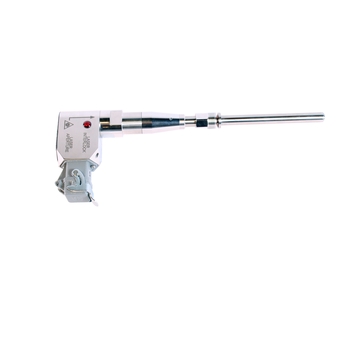
Body: 316L stainless steel Window: Proprietary material, optimized for bioprocesses Process connection: PG13.5 for industry standard sensor housings, welded port connectors available Surface finish: Ra 15 with electropolish Adhesive: USP Class VI and ISO993 compatible
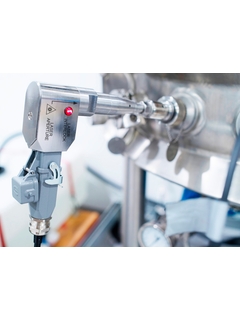
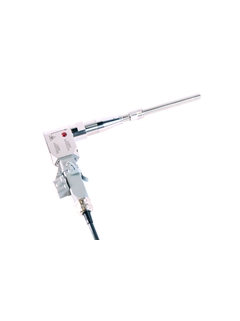
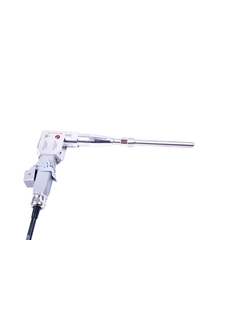
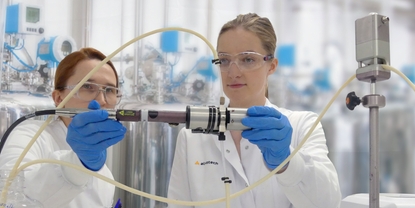
The Raman Rxn-45 probe capitalizes on the power of Raman in bioprocess manufacturing by measuring multiple, specific components in real-time for continuous, around-the-clock process feedback. It also meets the daunting sampling requirements of compliance, sterilization, port compatibility, and convenience. The Raman Rxn-45 probe was designed for installation in development and cGMP stainless-steel reactors and is successfully used to provide an analytical “eye” into large-scale bioprocesses.
Cell culture: glucose, lactate, amino acids, cell density, titer, and more
Fermentation: glucose, glycerol, acetate, methanol, ethanol, biomass, and more
Edut
Measures multiple components in real-time for automated 24/7 process feedback
Provides long-term measurement stability
Offers a suitable surface finish for cGMP manufacturing
Provides compatibility with industry standard bioreactor side ports and sensor housings
Offers the flexibility of being installed in development and production reactors
Reduces sterilization and cleaning burdens with CIP/SIP standard compatibility
Probe spectral coverage is limited by the coverage of the analyzer being used.
Ambient temperature
-30 to 70 °C / -22 to 158 °F
Maximum laser power into probehead (mW)
< 499
Sample interface
Temperature: -30 to 150 °C / -22 to 302 °F Temperature ramp: ≤ 30 °C/min ≤ 54 °F/min
Pressure
Max pressure: 13.8 barg / 200 psig
Wetted materials
Body: 316L stainless steel Window: Proprietary material, optimized for bioprocesses Process connection: PG13.5 for industry standard sensor housings, welded port connectors available Surface finish: Ra 15 with electropolish Adhesive: USP Class VI and ISO993 compatible
Bioprocessing infrastructure readiness for online analytical
instrumentation integration - Is your upstream operation ready for
seamless deployment of an online Raman spectroscopy system?
PU (julkaisu)
Englanti - 08/2026
New version available in English
This self-assessment questionnaire helps pharmaceutical and API manufacturers evaluate their readiness for implementing online Raman spectroscopy. A simple scoring system identifies potential infrastructure, integration, and process monitoring challenges, helping teams assess deployment complexity and prepare for successful real-time analytical monitoring.
Analytical costs, scale-up delays, and optimization potential in
upstream bioprocessing - Is your upstream process costing more than
you think?
PU (julkaisu)
Englanti - 08/2026
New version available in English
This self-assessment questionnaire helps bioprocessing teams evaluate analytical costs and delays associated with scaling up from laboratory development to production. A scoring system helps identify optimization opportunities and assess the value of real-time monitoring using online Raman spectroscopy.
Graphic illustrating the core elements of Biopharma 4.0 including product lifecycle stages, role of PAT/QbD, and 12 key advanced technologies for scientists and process engineers in the Life Sciences, applicable to Raman spectroscopy systems (Raman Rxn2, Raman Rxn4, Rxn-10, Rxn-45, Rxn-46, bio multi optic and sleeve, flow cell and flow bench, Raman optic system for single use, and Raman calibration & verification kits).
This guide explains Raman spectroscopy implementation in GMP-regulated pharmaceutical and biopharmaceutical manufacturing, covering qualification, validation, data integrity, supplier and user responsibilities, and risk-based compliance approaches for process analytical technology applications.
Analytical blind spots and contamination risks in upstream
bioprocessing - Are your cell cultures truly under control between
measurements?
PU (julkaisu)
Englanti - 08/2026
New version available in English
This self-assessment questionnaire helps cell culture and upstream bioprocessing teams identify analytical blind spots, contamination risks from manual sampling, and opportunities to improve process control through real-time monitoring. A simple scoring system highlights where online Raman spectroscopy may help improve data quality, reduce risk, and support faster process decisions.
Käytämme evästeitä parantaaksemme selauskokemustasi, kerätäksemme tilastoja sivuston toiminnan optimoimiseksi ja toimittaaksemme räätälöityjä mainoksia tai sisältöä.