Q&A: Gaining efficiencies in biopharmaceutical manufacturing with single-use instrumentation
Single-use instrumentation helps biopharmaceutical manufacturers increase flexibility, reduce contamination risks and improve efficiency from clinical trials to full-scale production

In brief
- Single-use technology helps biopharmaceutical manufacturers scale production more flexibly, from clinical trials and small batches to full-scale operations.
- Disposable process-contact components can reduce cleaning, sterilization and validation requirements while lowering costs and cross-contamination risks.
- Advancements in single-use flowmeters, Raman probes and capacitive level sensors are improving measurement reliability, efficiency and process control.
- As single-use technology continues to evolve, it is expected to further support productivity, safety, uptime and profitability in biopharmaceutical manufacturing.


The technology shift in biopharmaceutical manufacturing
In recent years, the biopharmaceutical industry has increasingly recognized the value of flexible manufacturing to meet variable production demands. This shift has driven the development and adoption of single-use technology, which allows production facilities to quickly scale operations from clinical trials and small-scale runs to conventional large batch sizes. Single-use technology offers significant benefits such as reduced costs, minimized cross-contamination risks and streamlined manufacturing efficiency. As this technology evolves, it continues to enhance productivity and adaptability in both small and large-scale operations, making it a critical component of modern biopharmaceutical manufacturing.
This Q&A explores the benefits and evolution of single-use technology and how single-use flowmeters are enhancing biopharmaceutical manufacturing processes.
1. What is single-use technology in biopharmaceutical manufacturing?
Single-use technology involves process-contact equipment designed to be replaced after each batch or manufacturing cycle. This includes components, assemblies and systems that do not require cleaning, sterilization or validation, helping to reduce costs and mitigate cross-contamination risks.
2. What are the business benefits of single-use technology?
Benefits include reduced expenditure on chemical agents, energy and water, streamlined manufacturing efficiency, accelerated time to market and enhanced flexibility to meet variable production demands.
3. What are the challenges associated with single-use technology?
Challenges include potential interactions between plastic materials and the process and the difficulty of adapting certain types of complex and advanced instrumentation, such as flowmeters, into single-use versions.
4. How has single-use technology evolved over time?
Single-use technology has become more user-friendly and efficient, with developments like “plug and play” modules facilitating the transition from batch-based operations to continuous processing. New single-use devices now offer comparable reliability and accuracy to conventional reusable counterparts.
5. What are single-use Coriolis flowmeters, and how do they work?
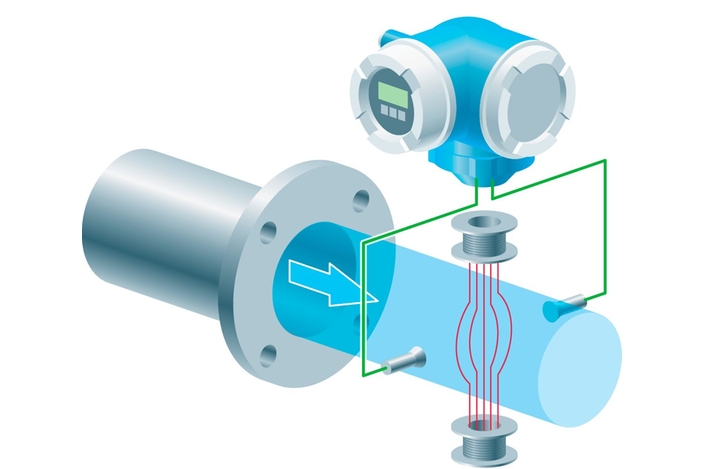
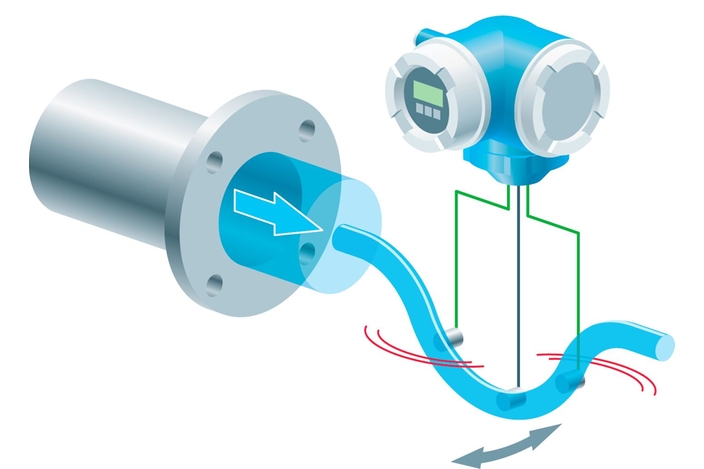
Single-use Coriolis flowmeters consist of a permanent transmitter and sensor with a disposable measuring tube. These tubes are factory-calibrated and designed to ensure high-performance measurement under various process conditions, providing accuracy and efficiency similar to conventional Coriolis instrumentation.
Endress+Hauser's Proline Promass U 500 is an example of this technology, combining reusable electronics with a disposable, gamma-sterilizable measuring tube to deliver highly accurate mass flow, density and temperature measurements in biopharmaceutical single-use applications. The system also uses Heartbeat Technology to automatically verify the validity of the factory calibration, eliminating the need for field calibration and supporting cGMP-compliant operations.
6. What role do Raman probes play in single-use bioreactors?
Raman spectroscopy probes and optical interfaces enable real-time, non-destructive monitoring in single-use bioreactors while supporting sterile operation and minimizing contamination risk. Depending on the application, measurements can be performed using immersion probes, non-contact optics that measure through a bioreactor bag or optical window, or reusable optics installed in protective sleeves that maintain separation between the probe and the process.
7. How do self-adhesive capacitive level sensors work in single-use applications?
These sensors are applied to the outside of a non-conductive container and detect the presence or absence of liquid. They are particularly useful for foam monitoring and provide reliable, non-contact level measurement, enhancing process safety and cost-efficiency.
8. Are there examples of successful implementation of single-use technology in the field?
One example is a pharmaceutical company that successfully used single-use capacitive level patches to monitor foam levels in their bioreactors. The system effectively detected foam levels and automated the deployment of antifoam agents, improving production efficiency and reliability.
9. What does the future look like for single-use technology in biopharmaceutical manufacturing?
The future of single-use technology looks promising, with ongoing advancements expected to further improve productivity, safety, adaptability, process uptime and profitability in both small and large-scale operations.