Wastewater collection and treatment: How to improve efficiency and performance
Understand the key operational challenges and how to overcome them with smarter monitoring and control

In brief
- Strengthen wastewater collection networks through better monitoring and stormwater management. Improve resilience, reduce overflow risks and maintain reliable operations in a changing climate.
- Optimize treatment performance from influent to sludge handling. Discover opportunities to improve efficiency and support regulatory compliance.
- Advance digital water management with real-time monitoring and process intelligence. Gain greater visibility, enable predictive maintenance and make faster data-driven decisions.


How to increase plant performance by monitoring, automation and process intelligence
Advanced monitoring, automation and process intelligence help municipal wastewater plants improve operational efficiency, raise treatment performance and ensure regulatory compliance. With real-time insights into collection and treatment processes, operators can better manage stormwater events, prevent overflows and react quickly to process changes. These capabilities matter more as plants face aging infrastructure, more frequent extreme weather events and stricter environmental rules. At the same time, they help cut operating costs and keep plant performance steady.
Key facts
3.4
billion people worldwide
still lack safely managed sanitation services, highlighting the need for investments in wastewater collection, transport and treatment infrastructure.
Source: United Nations Report
Where performance happens: Insights across the wastewater journey
From wastewater collection in sewer networks to final treatment and discharge, every process step affects plant performance, energy efficiency and regulatory compliance. Explore the wastewater journey to find ways to improve monitoring, process control, real-time visibility and data-driven decisions across the entire value chain.


Sewer network with stormwater retention basin for flow control and overflow protection
What are the key opportunities to optimize wastewater collection and treatment?
Meeting the demands of modern wastewater treatment takes an integrated plan that covers every stage of the process. From managing influent flows and cutting energy consumption to optimizing sludge treatment, each area offers room for improvement. Digital technologies provide better plant insight and support automated decisions, while water reuse helps save resources. Continuous monitoring and reporting also help operators stay compliant and built long-term plant performance.
Discover key opportunities across wastewater collection and treatment processes:
- Improve sewer network performance
- Reduce energy demand in biological treatment
- Optimize sludge processing efficiency
- Recover value from sludge streams
- Advance digitization and plant-wide visibility
- Enable sustainable water reuse


Industry experts analyze treatment operations and infrastructure to identify improvements across the wastewater value chain.
How to build resilient wastewater collection systems
Wastewater collection networks face growing pressure from aging infrastructure, urbanization, extreme weather events and climate change. Heavy rainfall can overwhelm sewer systems, leading to infiltration, inflow and combined sewer overflows that increase environmental risks and operational costs.
Limited visibility into network conditions also makes it difficult for operators to identify bottlenecks, predict failures and respond quickly to disturbances. To address these challenges, plants are adopting smart sewer management strategies that combine continuous flow and level monitoring, advanced analytics, predictive maintenance and real-time control.
These approaches help reduce overflow events, improve network resilience, optimize asset performance and support compliance in an increasingly unpredictable climate.
Discover the influence of reliable process sensors and real-time process insights in stormwater management systems.


Reliable wastewater transport at scale with proven screw pumping technology
What are the main stages of wastewater treatment?
Wastewater treatment is a multi-stage process that removes contaminants from municipal and industrial wastewater before it is safely discharged or reused. The process typically includes preliminary treatment to remove large debris, primary treatment to separate suspended solids, secondary treatment to biologically break down organic pollutants and tertiary treatment to remove nutrients, pathogens and fine particles. Together, these stages help protect public health, conserve water resources, and ensure environmental compliance.
Sludge treatment is a separate process that manages the solids collected and generated during wastewater treatment. It typically involves thickening, stabilization, dewatering, and final disposal or resource recovery to reduce volume and support sustainable waste management.
Key stages overview
- Preliminary treatment: Removes large debris, grit, sand and other coarse material with screens and grit chambers
- Primary treatment: Settles suspended solids and removes floating material such as oils and grease
- Secondary treatment: Uses microorganisms and biological processes to remove dissolved organic matter and lower pollutant levels
- Tertiary treatment: Provides advanced treatment through filtration, nutrient removal and disinfection to reach high water quality
- Sludge treatment: Processes and cuts the volume of sludge generated during treatment while enabling disposal, energy recovery or beneficial reuse
- Effluent discharge or reuse: Releases treated water safely to the environment or reuses it in industrial, agricultural or municipal applications

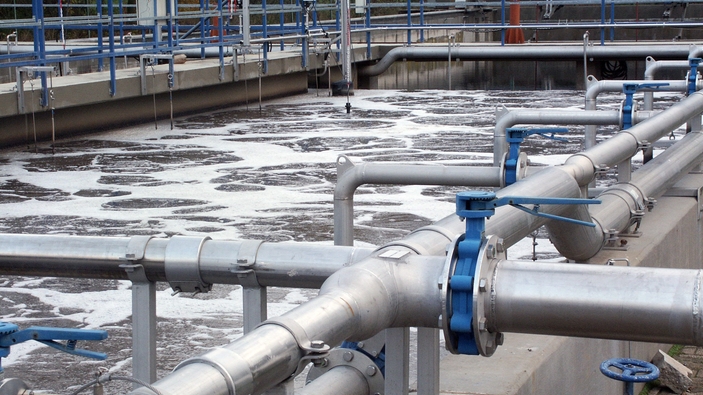
Activated sludge treatment in operation, where aeration provides oxygen for microorganisms to efficiently break down organic contaminants
Inside plants making wastewater treatment more efficient
Explore customer success stories and see strategies, tools and choices that drive better results across wastewater treatment operations.

How does digitalization improve wastewater operations?
Smart water management combines sensors, analytics and digital platforms to give operators greater visibility into their processes and assets. By enabling real-time monitoring, predictive maintenance, remote access and automated control strategies, digital technologies help improve plant performance, cut operating costs, raise reliability and support faster data-driven decisions.
Discover how digital technologies can help optimize your wastewater operation. Explore smart water management and Netilion Water solutions.

A wastewater professional uses a digital platform to monitor processes in real-time and support data-driven decisions
Why wastewater collection and treatment matters
From protecting drinking water sources to reducing pollution in rivers and lakes, proper wastewater collection and treatment plays a key role in public health, environmental protection and long-term community well-being.
- Protect public health
- Prevent environmental pollution
- Enable water reuse
- Improve operational reliability
- Recover valuable resources